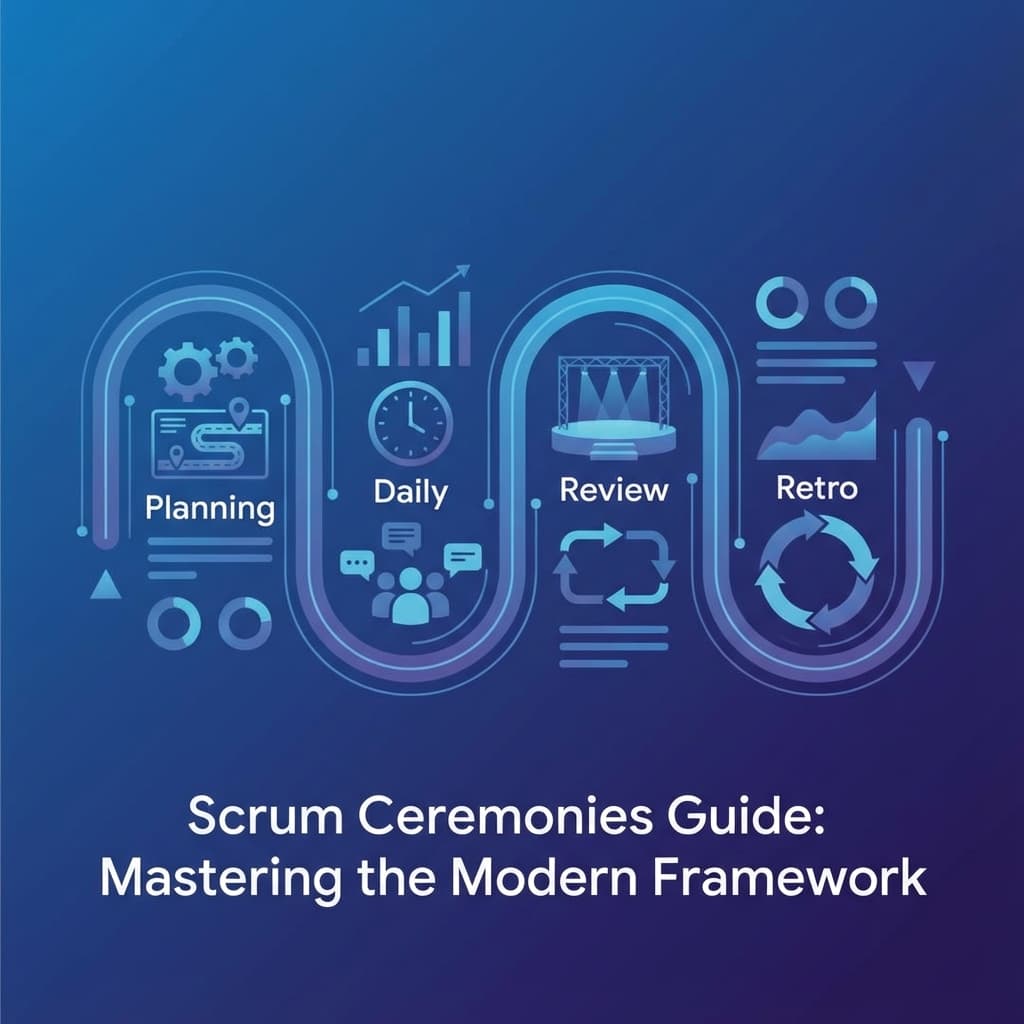
Scrum ceremonies are the heartbeat of agile development, creating rhythm and structure for teams to deliver value consistently. Discover how to master each ceremony and transform them from routine meetings into powerful drivers of team performance and continuous improvement.
The Purpose of Scrum Ceremonies
Why these events matter:
- Create regular cadence and predictability
- Provide opportunities for inspection and adaptation
- Ensure transparency and shared understanding
- Facilitate communication and collaboration
- Enable continuous improvement and learning
The Five Scrum Ceremonies
Planning Events
- Sprint Planning: What will be delivered
- Daily Scrum: Progress and coordination
- Sprint Review: Inspect and adapt product
Improvement Events
- Sprint Retrospective: Process improvement
- Backlog Refinement: Preparation work
Sprint Planning
Setting the stage for success:
- Timebox: Maximum 8 hours for a 4-week sprint
- Participants: Product Owner, Scrum Master, Development Team
- Purpose: Plan work for the upcoming sprint
- Outcomes: Sprint Goal, Sprint Backlog, initial plan
- Key Questions: What can be done? How will it be done?
Making Sprint Planning Effective
Best practices for success:
- Preparation: Well-groomed backlog and clear priorities
- Capacity Planning: Consider team availability and velocity
- Story Estimation: Use consistent estimation techniques
- Dependency Analysis: Identify and address task dependencies
- Sprint Goal Creation: Define a cohesive objective
Daily Scrum (Standup)
Daily coordination and synchronization:
- Timebox: Maximum 15 minutes
- Frequency: Every day at the same time
- Participants: Development Team and Scrum Master
- Purpose: Inspect progress and adapt daily work
- Focus: Sprint Goal and upcoming work
Running Effective Daily Scrums
Maximizing daily coordination:
- Three Questions: What did I do? What will I do? Any impediments?
- Physical Board: Use visual task boards for better visibility
- Focus on Sprint Goal: Keep discussions goal-oriented
- Impediment Resolution: Address blockers immediately after
- Time Management: Strictly enforce the 15-minute timebox
Sprint Review
Demonstrating value and gathering feedback:
- Timebox: Maximum 4 hours for a 4-week sprint
- Participants: Full team and stakeholders
- Purpose: Inspect increment and adapt Product Backlog
- Activities: Demo, feedback, discussion, next steps
- Outcome: Updated Product Backlog
Conducting Impactful Sprint Reviews
Making reviews valuable:
- Preparation: Ensure working software is ready for demo
- Stakeholder Engagement: Encourage active participation
- Focus on Value: Demonstrate business impact
- Feedback Collection: Capture and categorize input
- Action Items: Document decisions and next steps
Sprint Retrospective
Continuous improvement engine:
- Timebox: Maximum 3 hours for a 4-week sprint
- Participants: Scrum Team (Product Owner, Scrum Master, Developers)
- Purpose: Inspect process and create improvement plan
- Scope: People, relationships, processes, tools
- Outcome: Actionable improvement items
Facilitating Powerful Retrospectives
Driving meaningful improvements:
- Psychological Safety: Create an environment of trust
- Data-Driven: Use metrics and evidence
- Varied Formats: Keep retrospectives fresh and engaging
- Action Focus: Prioritize implementable improvements
- Follow-Up: Track progress on improvement items
Backlog Refinement (Grooming)
Preparing for future sprints:
- Timebox: Typically 10% of team capacity
- Frequency: Ongoing throughout the sprint
- Participants: Product Owner and Development Team
- Purpose: Ensure backlog items are ready
- Activities: Estimating, clarifying, splitting
Effective Backlog Management
Maintaining a healthy backlog:
- DEEP Criteria: Detailed, Estimated, Emergent, Prioritized
- Regular Refinement: Consistent grooming sessions
- Story Decomposition: Break down large items
- Acceptance Criteria: Clear definition of done
- Value Prioritization: Focus on highest impact items
Common Ceremony Pitfalls
Avoiding These Mistakes
- Skipping or shortening timeboxes
- Missing key participants
- Lack of preparation and follow-up
- Turning ceremonies into status reports
- Not addressing identified issues
Adapting Ceremonies for Your Context
Customizing for team needs:
- Team Size: Adjust for larger or smaller teams
- Distributed Teams: Modify for remote collaboration
- Project Complexity: Adapt for technical challenges
- Organizational Constraints: Work within company requirements
- Team Maturity: Evolve as teams develop
Measuring Ceremony Effectiveness
Tracking improvement:
- Team Velocity: Consistent delivery capability
- Sprint Goal Success: Percentage of goals achieved
- Quality Metrics: Defect rates and customer satisfaction
- Team Engagement: Participation and satisfaction levels
- Continuous Improvement: Implementation of retrospective actions
Tools for Effective Ceremonies
Supporting your events:
- Digital Boards: Jira, Trello, Miro for visualization
- Video Conferencing: Zoom, Teams for remote participation
- Collaboration Tools: Slack, Teams for communication
- Timer Applications: Timeboxing enforcement
- Documentation Systems: Confluence, Notion for records
The Future of Scrum Ceremonies
Evolving with new practices:
- AI-Enhanced: Intelligent assistance for planning and tracking
- Automated Reporting: Reduced administrative overhead
- Predictive Insights: Data-driven ceremony optimization
- Virtual Reality: Immersive collaboration experiences
- Adaptive Frameworks: Flexible ceremony structures
Why Effective Ceremonies Matter
The Scrumrobo Advantage
Scrumrobo enhances Scrum ceremonies with:
- Automated ceremony preparation and follow-up
- AI-powered insights for better decision making
- Seamless integration with your existing tools
- Significant time savings and improved effectiveness
Ready to Transform Your Team Collaboration?
Join thousands of teams using Scrumrobo to streamline their Agile workflows, automate standups, and boost productivity.
Automated Standups
Save hours with AI-powered async standups
Real-Time Insights
Get actionable data-driven team insights
Team Collaboration
Enhance productivity with smart automation