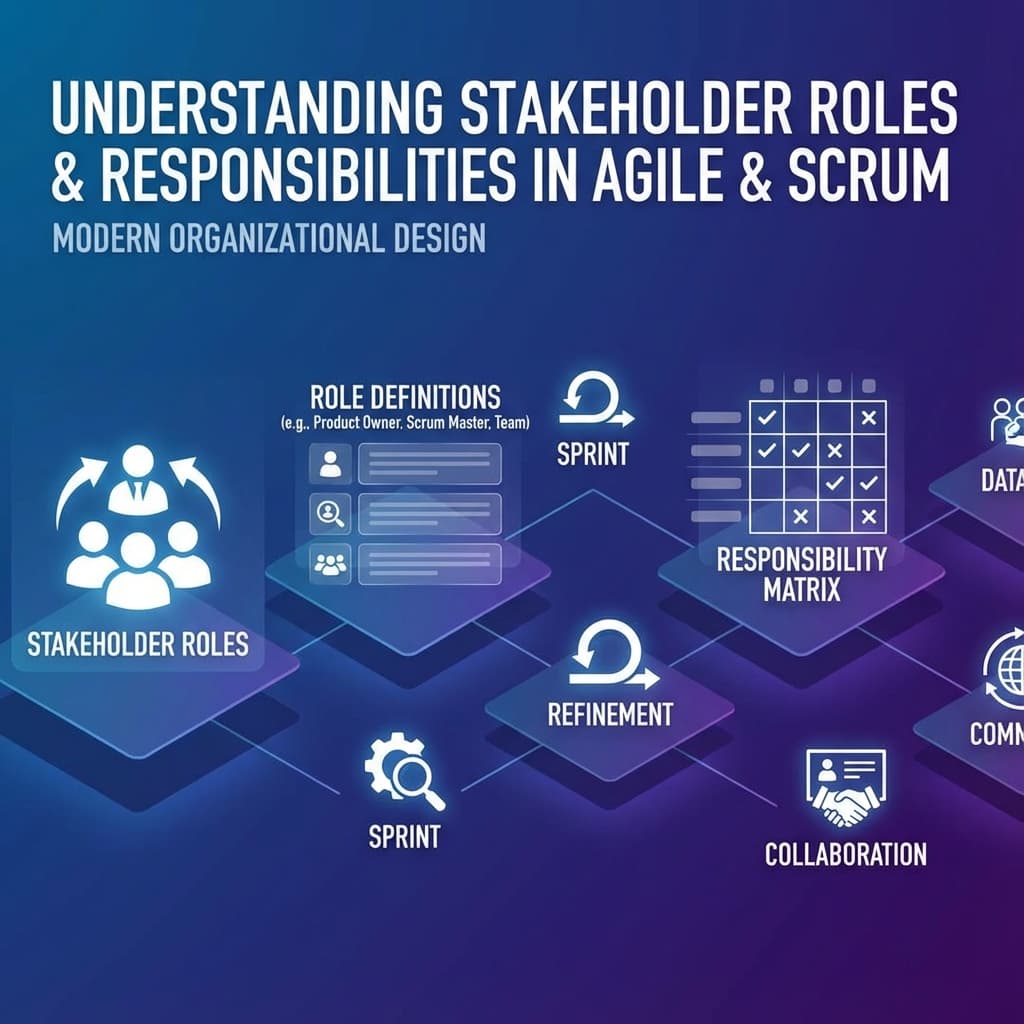
Effective stakeholder management is fundamental to Agile project success. Understanding the various stakeholder roles and their responsibilities helps ensure collaboration, alignment, and successful project outcomes.
Understanding Stakeholder Types
Agile projects involve multiple stakeholder categories, each with unique perspectives and contributions:
- Primary Stakeholders: Directly involved in project execution and outcomes
- Secondary Stakeholders: Indirectly affected by project results
- Key Stakeholders: Critical decision-makers and influencers
- External Stakeholders: Outside the organization but impacted by the project
- Internal Stakeholders: Within the organization and directly involved
Core Stakeholder Roles
Project Team Roles
- Product Owner: Represents business and user needs
- Scrum Master: Facilitates process and removes impediments
- Development Team: Builds and delivers product increments
- Agile Coach: Guides team in Agile practices
- Technical Lead: Provides technical direction
Business Roles
- Project Sponsor: Provides resources and support
- Business Analyst: Bridges business and technical needs
- End Users: Ultimate product consumers
- Subject Matter Experts: Provide domain expertise
- Customer Representatives: Voice customer needs
Key Responsibilities by Role
Each stakeholder role carries specific responsibilities that contribute to project success:
- Product Owner: Prioritizes backlog, defines requirements, accepts work
- Scrum Master: Facilitates ceremonies, coaches team, removes obstacles
- Development Team: Delivers increments, estimates work, self-organizes
- Project Sponsor: Secures funding, removes organizational barriers
- End Users: Provide feedback, validate solutions, adopt product
Stakeholder Engagement Strategies
Effective engagement requires tailored approaches for different stakeholder groups:
- Communication Plans: Customize messaging for each stakeholder type
- Participation Opportunities: Involve stakeholders in relevant ceremonies
- Feedback Mechanisms: Create channels for ongoing input and concerns
- Expectation Management: Clearly define roles and deliverables
- Relationship Building: Foster trust and collaboration
Managing Stakeholder Expectations
Balancing diverse expectations requires skill and attention:
- Clear Communication: Regular updates on progress and challenges
- Transparent Decision Making: Involve stakeholders in key decisions
- Realistic Planning: Set achievable goals and timelines
- Conflict Resolution: Address competing interests constructively
- Value Demonstration: Show progress and business impact regularly
Stakeholder Collaboration Tools
Leverage technology to enhance stakeholder collaboration:
- Collaboration Platforms: Shared workspaces for real-time interaction
- Project Management Tools: Visibility into progress and priorities
- Communication Channels: Multiple options for different needs
- Feedback Systems: Structured ways to collect and track input
- Reporting Dashboards: Visual representation of project status
Common Stakeholder Challenges
Address these common issues to improve stakeholder management:
- Conflicting Priorities: Balance different stakeholder needs
- Communication Gaps: Ensure information flows effectively
- Engagement Levels: Maintain appropriate involvement
- Decision Making: Navigate complex stakeholder dynamics
- Resource Allocation: Manage competing demands for attention
Measuring Stakeholder Satisfaction
Track these metrics to evaluate stakeholder engagement:
- Participation Rates: Attendance and involvement in ceremonies
- Feedback Quality: Relevance and actionability of input
- Satisfaction Surveys: Regular assessment of stakeholder experience
- Decision Timeliness: Speed and effectiveness of stakeholder decisions
- Relationship Health: Quality of stakeholder interactions
AI-Powered Stakeholder Management
Artificial intelligence can enhance stakeholder engagement:
- Sentiment Analysis: Monitor stakeholder satisfaction and concerns
- Engagement Analytics: Track participation patterns and preferences
- Communication Optimization: Personalize messaging and timing
- Predictive Insights: Anticipate stakeholder needs and issues
- Automated Reporting: Generate tailored stakeholder updates
Best Practices for Stakeholder Success
Proven Approaches
- Establish clear roles and responsibilities from project start
- Create structured communication plans and schedules
- Regularly assess and adjust engagement strategies
- Foster a culture of collaboration and transparency
- Leverage technology to enhance stakeholder experience
Why AI-Enhanced Stakeholder Management Matters
Superior Stakeholder Engagement
Scrumrobo transforms stakeholder management with:
- AI-powered sentiment analysis and insights
- Automated engagement tracking and reporting
- Personalized communication and updates
- Predictive analytics for stakeholder needs
Ready to Transform Your Team Collaboration?
Join thousands of teams using Scrumrobo to streamline their Agile workflows, automate standups, and boost productivity.
Automated Standups
Save hours with AI-powered async standups
Real-Time Insights
Get actionable data-driven team insights
Team Collaboration
Enhance productivity with smart automation